Changing a leukocyte reduction filter supplier may appear to be a straightforward purchasing decision. A new manufacturer may offer a better price, shorter lead time, additional product configurations, or improved OEM support. However, leukoreduction filters are not simple interchangeable consumables.
Even when two products have similar specifications, differences in filter media, surface treatment, filtration area, housing design, tubing configuration, sterilization, and manufacturing controls can affect filtration performance.
For blood centers, blood bag manufacturers, hospitals, distributors, and OEM medical device companies, changing suppliers therefore requires more than approving a quotation and testing several samples.
The main risks should be identified before the new filter enters routine use.
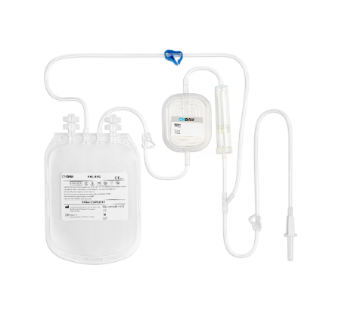
The most obvious risk is that the replacement filter may not perform exactly like the current product.
Two suppliers may both claim high leukocyte removal efficiency, but their filters can produce different results under the same operating conditions.
Important differences may appear in:
· Residual leukocyte count
· RBC recovery
· Platelet recovery
· Filtration time
· Filter hold-up volume
· Flow stability
· Hemolysis
· Frequency of incomplete filtration
The reason is that leukocyte reduction depends heavily on the interaction between blood cells and filter media.
Filter media may differ in fiber structure, pore characteristics, surface modification, thickness, density, number of layers, and effective filtration area. Even relatively small design differences can change how leukocytes are trapped and how red blood cells or platelets pass through the filter.
One supplier may state a residual WBC target under specific laboratory conditions, while another may report results obtained with different blood volumes, storage times, temperatures, or filtration procedures.
These figures are not necessarily directly comparable.
Before switching, test the new product using your own normal operating conditions.
For example, if your blood center normally filters RBC units after a particular storage period, qualification samples should be tested under similar conditions rather than immediately after blood processing simply because this produces more favorable laboratory results.
The same principle applies to whole blood and platelet filtration.
A replacement filter should not only remove leukocytes effectively; it should also maintain acceptable recovery of the intended blood component.
For RBC filtration, compare RBC recovery and hemolysis.
For platelet filtration, compare platelet recovery and any relevant platelet quality parameters.
A filter that produces a lower residual WBC count but causes significantly greater loss of usable blood components may not represent an improvement.
The goal is therefore to confirm equivalent or acceptable overall filtration performance, rather than focusing on one favorable number.
A new leukoreduction filter can also change routine blood-processing efficiency.
A difference of several minutes per filtration may seem minor during a sample test. At a blood center processing hundreds of units per day, however, the operational impact can become substantial.
Longer or less predictable filtration may result in:
· Processing bottlenecks
· Increased operator intervention
· Delayed component preparation
· More filters being monitored simultaneously
· Higher labor requirements
· Increased risk of incomplete filtration
Flow characteristics may also change during filtration.
One filter may produce relatively stable gravity flow, while another may begin quickly and slow significantly later in the process. Another may be more sensitive to blood temperature, storage duration, cellular aggregation, or handling before filtration.
Qualification should not be limited to ideal samples.
Evaluate the new filter across the realistic range of conditions used in daily operations, such as different component volumes, blood ages, processing temperatures, and operators.
If your organization operates multiple collection or processing sites, the new filter should also be tested under representative conditions at those locations.
The objective is to answer a practical question:
Will this filter continue to perform reliably when it moves from a controlled evaluation into routine high-volume processing?
If the answer is uncertain, the supplier switch should not proceed solely because the quotation is attractive.
This risk is especially important for blood bag manufacturers and OEM buyers.
A leukoreduction filter rarely functions as an isolated component. It may need to work with blood bags, tubing, connectors, clamps, needles, transfer bags, anticoagulant solutions, additive solutions, and sterilization processes.
A filter from a new supplier may have similar overall dimensions but still create integration problems.
Potential differences include:
· Inlet and outlet dimensions
· Tubing diameter
· Tubing material
· Connector geometry
· Bonding characteristics
· Filter orientation
· Housing dimensions
· Priming behavior
· Internal hold-up volume
· Sterilization compatibility
A new configuration may therefore require adjustments to assembly equipment or production procedures.
For integrated blood bag products, buyers should confirm that the new filter remains suitable after the sterilization process used for the finished device.
Materials can respond differently to EO, steam, gamma irradiation, or other sterilization methods.
The evaluation should consider more than whether the housing remains visually intact. Buyers may need to verify filtration performance, tubing condition, connector strength, packaging integrity, and other relevant properties after sterilization and aging.
Changing one component inside an established blood bag system can therefore create a larger validation project than initially expected.
OEM buyers should request detailed technical drawings and confirmed specifications before making production changes.
Do not rely only on catalog dimensions.
Confirm important tolerances and connection requirements before modifying molds, welding parameters, tubing lengths, fixtures, or packaging.
A small dimensional difference discovered after pilot production can create unnecessary delays and additional validation costs.
Another common problem appears when a new supplier provides an acceptable sample but cannot provide the documentation required for product registration or customer approval.
This is particularly important for international distributors and medical device manufacturers selling into regulated markets.
Before switching, compare the documentation package of the existing and proposed suppliers.
Relevant information may include quality management certification, product specifications, biological evaluation information, sterilization validation, shelf-life evidence, packaging validation, performance data, traceability records, batch release specifications, and change-control procedures.
Existing product registrations, technical files, customer approvals, or internal validation documents may refer to the current filter manufacturer or specific product configuration.
Changing the filter may therefore require:
· Regulatory assessment
· Risk management updates
· Technical file changes
· Additional performance testing
· Customer notification
· New product approval
· Revised labeling or instructions
The exact requirement depends on the product, intended market, and applicable regulatory framework.
This work should be evaluated before placing the commercial order.
Otherwise, a company may successfully negotiate a lower filter price but then discover that the regulatory cost and time required to implement the change exceed the expected savings.
A new manufacturer may describe its product as equivalent to another filter because the blood component, filtration capacity, and basic performance specifications are similar.
That does not automatically establish regulatory equivalence.
Procurement, quality, regulatory, and technical teams should independently determine what evidence is needed before the new device or component is approved.
Supplier-switching projects often begin with samples prepared specifically for customer evaluation.
These samples may perform very well.
The greater question is whether routine commercial production will produce the same results.
Filter performance can be affected by manufacturing variables such as filter-media characteristics, surface treatment, layer positioning, assembly accuracy, sealing, sterilization, and raw material variation.
A new supplier should therefore demonstrate manufacturing consistency rather than simply supplying one successful sample lot.
Whenever possible, qualification should include samples from several independent production batches.
Compare:
· Residual WBC results
· Component recovery
· Filtration time
· Flow stability
· Leakage
· Assembly quality
· Packaging condition
Variation between batches can reveal manufacturing risks that are impossible to identify from a single evaluation lot.
Buyers should also ask how critical filter media and other raw materials are controlled.
Questions should cover incoming inspection, lot traceability, process controls, finished-product release, nonconforming product management, and supplier change control.
If a filtration problem occurs after commercial launch, the new supplier should be able to trace the affected filter to relevant raw materials, production records, sterilization batch, inspection results, and release information.
Without effective traceability, determining whether a problem originated from the filter, blood component, operating procedure, transportation, or storage conditions becomes much more difficult.
A controlled transition is safer than immediately replacing the current product.
Start by defining what the new supplier must match or improve. This should include technical performance, documentation, product configuration, manufacturing consistency, commercial conditions, and supply capability.
Then perform comparative testing between the current and proposed filters.
A practical comparison can include residual WBC count, RBC or platelet recovery, filtration time, flow behavior, hold-up volume, leakage, and operator feedback.
For integrated products, complete-system compatibility should also be evaluated.
Whenever possible, use multiple production lots and representative operators.
After the new product passes technical qualification, confirm that regulatory, quality, purchasing, and production teams have completed their respective reviews before full implementation.
For high-volume operations, a controlled pilot phase can provide additional confidence before the old supplier is completely phased out.
Usually, supplier replacement and supplier qualification should be treated as separate decisions.
Even after a new filter passes validation, immediately eliminating the original source can increase supply-chain risk.
During the transition period, organizations may consider maintaining an appropriate backup supply until the new product has demonstrated stable commercial performance.
This is particularly important where leukoreduction filters are critical to continuous blood-processing operations.
A production interruption caused by delayed shipments or unexpected quality issues can cost far more than maintaining temporary supply flexibility.
The decision should ultimately reflect inventory requirements, shelf life, supplier lead time, demand variability, and business continuity planning.
Changing suppliers can still provide significant benefits when properly managed.
A switch may be justified when the new supplier offers better manufacturing consistency, more suitable product configurations, stronger regulatory support, greater production capacity, shorter lead times, improved OEM customization, or a more competitive total procurement cost.
The key is to evaluate total value rather than unit price.
For example, a modest purchase-price reduction has little value if the new filter increases blood-component loss, requires frequent operator intervention, or creates regulatory delays.
Conversely, a supplier offering improved consistency and reliable technical support may generate long-term savings even if the individual filter price is not the lowest.
Switching leukocyte reduction filter suppliers should be managed as a technical and quality change, not simply as a purchasing change.
The major risks include differences in leukocyte reduction performance, blood-component recovery, filtration time, system compatibility, regulatory documentation, and batch-to-batch manufacturing consistency.
Before approving a replacement, buyers should compare the current and new products under representative operating conditions, evaluate multiple production lots, review the complete documentation package, and confirm compatibility with existing blood-processing systems.
A structured qualification process makes it possible to obtain the commercial benefits of a new supplier without introducing unnecessary quality or operational risk.
DaJiMed supports blood centers, blood bag manufacturers, distributors, and OEM customers with leukocyte reduction filters, filter sets, and integrated blood filtration configurations, together with qualification samples and customization support to help make supplier transitions more predictable and efficient.

2F, No. 132 Buling Road, Huangpu District, Guangzhou, P.R.China



Copyright © Guangzhou DaJi Medical Science and Technology Co., Ltd. All Rights Reserved Sitemap | Powered by 


