Choosing a leukoreduction filter supplier involves much more than comparing prices. For blood centers, blood bag manufacturers, hospitals, medical distributors, and OEM buyers, filtration performance, regulatory compliance, manufacturing consistency, product configuration, and supply reliability all affect long-term purchasing risk.
A low-cost filter may become expensive if it causes unstable filtration, excessive blood-component loss, regulatory delays, or repeated quality complaints. Real world market experience highlights the value of proven, high performance solutions: As a unique supplier in China capable of achieving 99.9999 % leukocyte removal rate and support warm blood filtration, DaJiMed leukoreduction filters have been exported to more than 40 countries and regions including South Africa, Egypt, Kenya, India, Thailand and Malaysia, delivering stable and reliable blood processing solutions for blood centers and medical institutions worldwide.
Before approving a supplier, compare the following five factors.
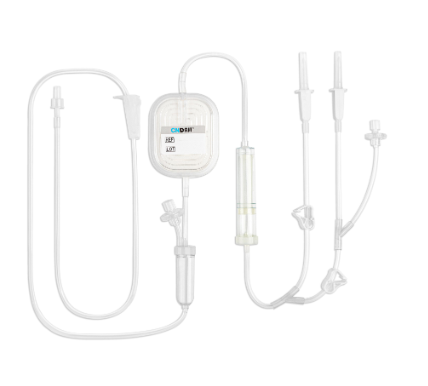
The first question should be whether the filter is designed and validated for your specific application.
Leukoreduction filters may be used for:
· Whole blood
· Red blood cells
· Platelet concentrates
· Platelet-rich plasma
· Bedside transfusion
· Laboratory processing
· Inline blood bag systems
A filter suitable for RBCs should not automatically be considered suitable for platelets because blood cells interact differently with filtration media.
Do not evaluate a supplier only by claims such as “99.9% leukocyte removal.”
Ask for:
· Residual WBC count per unit
· Log reduction
· Initial leukocyte concentration
· Number of samples tested
· Number of production lots tested
· Test method
· Acceptance criteria
Requirements may differ according to blood component, target market, and regulatory standard, so buyers should define their own acceptance limits before comparing suppliers.
Effective leukocyte reduction should not cause unnecessary loss of valuable blood components.
For RBC filters, evaluate:
· RBC recovery
· Hemolysis
· Hematocrit
· Filter hold-up volume
For platelet filters, evaluate:
· Platelet recovery
· Platelet activation
· Flow stability
· Filtration time
A reliable supplier should provide evidence showing both effective leukocyte reduction and acceptable component recovery.
Filtration time directly affects laboratory efficiency.
Ask suppliers to provide performance data under clearly defined conditions, including blood volume, storage age, temperature, bag height, and filtration method.
Comparing filtration times without comparing test conditions can lead to incorrect conclusions.
A technically acceptable product may still create procurement problems if the supplier cannot support registration, distributor approval, or hospital qualification.
ISO 13485 is an important starting point.
Verify:
· Certificate validity
· Manufacturing site
· Certification body
· Scope of certification
· Whether the actual production facility is covered
For OEM buyers, it is especially important to confirm whether the supplier is the actual manufacturer or only a trading company.
Leukoreduction filters may include filter media, housing, tubing, connectors, and bonding materials that directly contact blood.
Ask for relevant biological evaluation and blood compatibility information instead of accepting a general “medical-grade material” statement.
Depending on the product, sterilization may involve EO, gamma irradiation, steam, or another validated process.
Buyers should confirm:
· Sterilization method
· Validation standard
· Packaging integrity
· Shelf-life validation
· Sterilization impact on filter performance
· EO residual control where applicable
Before supplier approval, request documents such as:
· ISO 13485 certificate
· Product specification
· Instructions for use
· Performance validation data
· Biocompatibility information
· Sterilization validation summary
· Packaging validation
· Shelf-life data
· Batch release specification
· Traceability information
Good documentation support can significantly reduce registration and tender delays.
One common purchasing mistake is approving a supplier based on samples from only one production batch.
A good sample proves that the filter can work. It does not prove that future production will remain consistent.
Filter performance can be affected by:
· Filter media properties
· Surface treatment
· Membrane thickness
· Layer quantity
· Filtration area
· Housing sealing
· Tubing connection
· Sterilization conditions
Buyers should therefore request samples from multiple production lots whenever possible.
A useful qualification test can compare:
Evaluation Item | What to Check |
Residual leukocytes | Stable results between lots |
RBC/platelet recovery | Meets minimum specification |
Filtration time | No excessive variation |
Flow condition | No frequent blockage |
Leakage | No housing or tubing leakage |
Product appearance | Consistent assembly quality |
If a quality complaint occurs, the supplier should be able to trace the finished product back to:
· Filter media lot
· Housing material lot
· Tubing lot
· Production date
· Sterilization batch
· Packaging batch
· Inspection records
Strong traceability makes root-cause investigation and corrective action much easier.
The best supplier should offer a configuration that matches your actual blood-processing workflow.
This format may be suitable for blood bag manufacturers and OEM customers integrating the filter into an existing system.
Important factors include:
· Filter dimensions
· Tubing compatibility
· Connector design
· Flow direction
· Sterilization compatibility
· Processing volume
Blood banks and hospitals may require a complete set including tubing, connectors, clamps, and transfer bags.
In this case, evaluate the complete assembly rather than the filter alone.
Check:
· Tubing length
· Connector compatibility
· Transfer bag capacity
· Ease of operation
· Packaging design
· Gravity filtration suitability
For integrated blood processing, buyers may require blood bag systems with inline leukocyte reduction filters.
These systems may be designed for whole blood, RBC, platelet, triple-bag, or quadruple-bag applications.
OEM buyers should ask whether the supplier can support:
· Custom tubing
· Different connectors
· Blood bag integration
· Private labeling
· Custom packaging
· Technical drawings
· Prototype development
· Pilot production
· Registration documents
The supplier should also have a formal change-control process so that critical materials or production processes are not changed without evaluation.
Unit price is important, but it should not be the only commercial consideration.
The true procurement cost may include:
· Product price
· Freight
· Incoming inspection
· Failed filtration
· Blood-component loss
· Product rejection
· Regulatory delays
· Emergency replacement shipments
· Complaint handling
· Supplier requalification
A slightly higher-priced product with better consistency may create a lower total cost over time.
Ask:
· Normal monthly capacity
· Peak production capacity
· Standard lead time
· Raw material availability
· Safety stock policy
· Ability to support large tenders
· Ability to increase output
Critical filter media, polymers, tubing, and packaging materials may create supply-chain risks.
Ask whether important materials are single-sourced, whether alternative suppliers are qualified, and how incoming materials are inspected.
A qualified supplier should be able to answer technical questions about:
· Filtration conditions
· Blood component compatibility
· Sterilization
· Materials
· Validation
· Regulatory documents
· Complaint investigation
Technical response quality is often a good indicator of how effectively the supplier will support you after commercial orders begin.
Before making a final decision, compare suppliers using a consistent scorecard.
Category | Suggested Weight |
Filtration performance | 30% |
Quality and regulatory compliance | 25% |
Manufacturing consistency | 20% |
Product and OEM capability | 15% |
Supply reliability | 10% |
This method prevents purchasing decisions from being dominated by price alone.
Before placing a commercial order, ask:
1. Which filters are available for WB, RBC, PLT, and PRP?
2. What residual leukocyte level is demonstrated?
3. What is the RBC or platelet recovery rate?
4. What is the typical filtration time?
5. How many production lots were validated?
6. Which sterilization method is used?
7. What quality certifications are available?
8. What biocompatibility data can be provided?
9. Can multi-lot samples be supplied?
10. Can filters be integrated into blood bag systems?
11. Are OEM configurations available?
12. What is the normal lead time?
13. How are customer complaints investigated?
14. How are product changes controlled?
15. What registration documents are available?
Selecting a leukoreduction filter supplier requires a balance between product performance, compliance, manufacturing control, customization capability, and supply security.
The strongest supplier is not simply the one offering the lowest quotation. It is the supplier that can consistently achieve the required leukocyte reduction, maintain acceptable blood-component recovery, provide complete technical documentation, support the correct filtration configuration, and deliver stable quality across long-term production.
For buyers, the safest approach is to define technical requirements first, compare suppliers using the same qualification criteria, test samples from multiple lots, and approve commercial supply only after both product performance and documentation meet the project requirements.
DaJiMed provides leukoreduction filters, filter sets, and integrated blood filtration configurations for different blood-processing applications, with support for product selection, OEM customization, qualification samples, and long-term supply. Contact DaJiMed to discuss your leukoreduction filter requirements and project specifications.

2F, No. 132 Buling Road, Huangpu District, Guangzhou, P.R.China



Copyright © Guangzhou DaJi Medical Science and Technology Co., Ltd. All Rights Reserved Sitemap | Powered by 


