An RBC leukocyte reduction filter may meet its filtration specifications, but that alone does not make it suitable for every blood bag system. The filter must connect correctly to the blood bag outlet, remain securely in place, maintain a leak-free fluid path, and fit the intended processing or transfusion workflow. A connector that is difficult to insert, too loose, or incorrectly positioned can create handling problems, damage the port, interrupt blood processing, or cause leakage.
For blood bag manufacturers, blood banks, hospitals, and medical distributors, connector compatibility should therefore be confirmed before a new RBC filter is approved for routine use or bulk purchasing. The evaluation should cover the actual spike-and-port interface as well as the complete tubing and filter configuration. This guide explains how to organize that evaluation, what information to exchange with a supplier, and which tests can help establish compatibility.
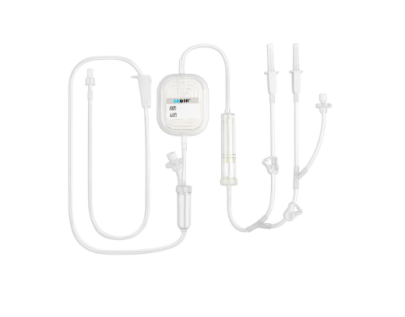
The connection between a blood bag and an RBC filter is a functional interface, not simply a physical fit. The spike or closure-piercing device must enter the blood bag outlet port in the intended way. Once connected, the interface must remain stable during handling and filtration without visible leakage or damage to the port, spike, or surrounding tubing.
A mismatch can appear in several ways. A spike may require excessive force to penetrate the port. It may enter only partially, bend during insertion, or fail to remain securely seated. A connection that appears acceptable at first may loosen when the bag is moved or suspended. In other cases, the port may show deformation, tearing, or leakage after connection. These issues can disrupt a blood processing workflow even when the filter itself performs as expected.
Compatibility also affects the repeatability of the overall system. A blood center may use a defined blood bag model, a particular filter set, and a standard operating procedure across many units. If a replacement filter has a different spike design or tubing arrangement, the existing workflow may no longer be appropriate. A compatibility assessment should therefore confirm the exact combination of bag, filter, and associated equipment rather than treating each component as an isolated product.
Before measuring a connector, identify which connection in the system is being evaluated. In a typical setup, the blood bag outlet port receives a spike or closure-piercing device attached to the filter set. The filter is then connected through tubing to the remaining fluid path or collection components. Other connections in the set may use different connector designs and should not be confused with the blood bag port interface.
A spike-to-port connection is not the same as a Luer connection, a sterile tubing weld, or a general-purpose tube connector. Each interface has its own geometry, joining method, and verification requirements. If a project involves more than one connection type, list and assess each interface separately.
Start by documenting the current system:
• Blood bag manufacturer, product name, model, and relevant revision or catalog number.
• Blood bag port type, port location, port dimensions, closure or septum design, and the manufacturer's instructions for use.
• RBC filter manufacturer, model number, product revision, and whether the filter is supplied as a standalone component or a complete set.
• Spike quantity and arrangement, including whether the application requires a single-spike or dual-spike configuration.
• Tubing material, inner and outer diameter where specified, length, connection points, clamps, and any downstream components.
• Intended use: laboratory or blood bank processing, bedside transfusion, or integration into a blood bag assembly.
• Applicable destination-market requirements and the standards identified in the product's technical documentation.
A photograph can help explain the layout, but it cannot replace a controlled drawing or product specification. Where possible, provide the supplier with the blood bag port drawing, the filter-set drawing, and the relevant instructions for use. If the drawings are unavailable, representative physical samples may be needed for a preliminary fit assessment, followed by formal compatibility testing.
Dimensional compatibility is the first technical review. The objective is to establish whether the spike geometry and the blood bag port are designed to work together within their specified tolerances. Comparing only the nominal diameter is not enough because the connection depends on several interacting features.
Spike characteristics to review include:
• Tip geometry and centering: the shape and alignment of the piercing tip influence how the spike enters the port closure.
• External diameter and profile: the dimensions of the piercing section and the portion that remains seated in the port affect fit and retention.
• Insertion length and depth: the spike must reach the intended position without bottoming out incorrectly or leaving the connection partially engaged.
• Shoulder or stop geometry: where present, this feature can help define the intended insertion position and prevent incorrect engagement.
• Surface condition and material: surface finish, rigidity, and material properties can influence insertion behavior and the risk of deformation.
Blood bag port characteristics also matter. Review the port's internal opening, closure material, wall thickness, flexibility, and dimensional tolerances. The design must accommodate the specified spike without damaging the port or creating an unstable seal. A port that is too rigid, too soft, or dimensionally inconsistent may behave differently during insertion even if its external appearance is similar to another port.
Do not assume that two blood bags with similar-looking ports are interchangeable. Port geometry, closure materials, and manufacturing tolerances can vary by model and supplier. Likewise, do not assume that a spike used successfully with one bag model will fit every product in the same manufacturer's range.
The appropriate comparison is between the controlled drawings and tolerances of the exact products under evaluation. If a dimension is not available, ask the manufacturer to confirm the relevant interface specification rather than estimating it from a photograph or using force to make the parts fit.
A connector can have dimensions that appear compatible but still be difficult to use. Insertion force is therefore an important part of the assessment. If the force is too high, the operator may struggle to pierce the port, the spike may be pushed off-axis, or the port may be damaged. If the connection does not engage securely, it may loosen during handling or filtration.
ISO/TS 23128:2019, Medical devices — Transfusion set and blood bag compatibility test method, describes a method for evaluating compatibility between a transfusion-set spike and a blood bag outlet port by measuring insertion force. It is useful as a technical reference when the products and intended interface fall within its scope. The applicable test method, acceptance criteria, and responsibilities should be confirmed for the specific device combination.
The assessment should record the force required to initiate penetration and complete insertion, the insertion direction, the test fixture, sample conditioning, and the observed condition of the port and spike after the test. A result should not be interpreted without the test setup: different fixtures, speeds, sample conditions, and port designs can affect measured force.
Retention should be checked after insertion. For applicable blood bag and transfusion-set combinations, ISO 3826-1:2019 includes a requirement for a connection using a closure-piercing device conforming to ISO 1135-4 or ISO 1135-5 to resist a static pull force of 15 N for 15 seconds and remain in place. The standard also addresses visible leakage at the connection. Buyers should verify the exact scope and current regulatory applicability before using these provisions as acceptance criteria for a particular RBC filter assembly.
The current ISO 3826-1:2019 standard covers conventional sterile, non-vented plastic containers for blood and blood components. It does not apply to plastic containers with an integrated filter, so an integrated blood bag-filter design may require a different standards assessment. For gravity-feed transfusion sets, ISO 1135-4:2025 addresses compatibility with blood and blood-component containers and intravenous equipment. The relevant standard depends on the product type and intended use; standards should not be applied by title alone.
A connection that can be assembled is not necessarily a satisfactory connection. After insertion, inspect the interface for visible leakage, incomplete engagement, cracks, deformation, or other damage. The inspection should be carried out under a defined test procedure rather than relying only on a quick visual check immediately after assembly.
A practical evaluation can include the following checks:
• Initial connection inspection: confirm that the spike is inserted to the intended position and that the port has not split, distorted, or been displaced.
• Leakage assessment: check the connection under the applicable test conditions and observe whether fluid escapes around the port-spike interface.
• Retention assessment: confirm that the spike remains seated when the assembly is handled or subjected to the specified retention test.
• Post-test inspection: examine the port, spike, and adjacent tubing for damage, loosening, cracks, or signs of abnormal stress.
• Repeatability: assess multiple representative samples to determine whether the connection behaves consistently rather than relying on one successful insertion.
The test protocol should specify the test fluid, pressure or loading conditions where relevant, temperature, orientation, duration, sample quantity, and pass/fail criteria. These conditions must be selected by qualified technical personnel based on the applicable product standards, risk analysis, and intended use. Do not create an arbitrary pressure or pull-force limit simply to make a supplier comparison appear quantitative.
If leakage or damage occurs, stop the evaluation and investigate the cause. Possible contributors include dimensional mismatch, excessive insertion force, poor alignment, an unsuitable port material, manufacturing variation, or incorrect handling. Repeatedly forcing the spike into the port is not an acceptable way to demonstrate compatibility.
The blood bag port is only one part of the system. A compatible spike does not automatically mean that the complete RBC filter set is suitable for the existing workflow. Review the tubing path, filter orientation, clamps, connection sequence, and the position of each component during use.
Tubing should be long and flexible enough for the intended setup without creating unnecessary tension at the blood bag port. Check whether the tubing can be routed without kinking, twisting, compression, or interference with the filter housing. Confirm that clamps and other controls are accessible and that the tubing does not pull the spike away from its seated position when the bag is suspended or moved.
The number and arrangement of spikes also matter. A single-spike set and a dual-spike set may be intended for different connection arrangements. The buyer should confirm the function of each spike from the approved drawing and instructions for use rather than assuming that an additional spike is simply a spare or that it can be connected to any available port.
For bedside applications, consider the actual point-of-use setup, including bag suspension, operator access, and the sequence of connecting the filter set. For laboratory or blood bank processing, consider the full processing arrangement and how the filter set interfaces with the collection or transfer bags. Compatibility should be demonstrated in the configuration in which the product will actually be used.
Avoid unapproved adapters, improvised tubing extensions, or modifications to the spike or port. An adapter may change the connection geometry, add another potential leakage point, alter the fluid path, or introduce a configuration that has not been evaluated. If an adapter or custom connector is necessary, it should be treated as a design change requiring documented review and appropriate verification.
The strongest evidence comes from testing the exact combination of blood bag, RBC filter, and associated components intended for use. A generic statement that a spike is compatible with standard blood bags is not a substitute for evaluating the buyer's actual bag model and filter configuration.
A structured compatibility test can follow these stages:
Step 1: Define the test combination. Record the blood bag manufacturer and model, port type, RBC filter model and revision, spike configuration, tubing arrangement, and intended use.
Step 2: Review controlled information. Compare the drawings, dimensional specifications, instructions for use, and applicable standards. Resolve any missing or conflicting interface information before physical testing.
Step 3: Inspect incoming samples. Check the sample identity, packaging condition, component configuration, and visible condition of the spike and blood bag port before assembly.
Step 4: Perform insertion testing. Assemble the spike and port using the defined procedure. Record insertion force where required, insertion position, ease of assembly, and any damage or abnormal behavior.
Step 5: Verify retention and leakage. Apply the relevant test methods and acceptance criteria. Record whether the connection remains secure and whether visible leakage or damage is observed.
Step 6: Evaluate the complete setup. Route the tubing, position the filter and bags, operate the clamps, and confirm that normal handling does not pull, twist, or loosen the connection.
Step 7: Document the result. Identify the exact component revisions tested, sample quantities, test conditions, results, deviations, and final approval decision.
Where the buyer uses more than one blood bag model, each relevant bag-port combination should be assessed. A successful result for one port design should not automatically be extended to another model unless a justified equivalence assessment supports that decision. The test sample quantity and repeatability plan should be defined according to product risk and the organization's quality procedures.
If a compatibility problem is found, the supplier and buyer should agree on the corrective action. Options may include selecting another filter configuration, adjusting a design within the manufacturer's controlled process, or reviewing the blood bag interface. Any change should be followed by the required re-evaluation before the revised combination is approved.
Connector compatibility begins with selecting the correct product type. Laboratory and bedside RBC filter sets may have different tubing layouts and connection arrangements because they serve different workflows. The buyer should therefore specify the intended application before requesting a sample or quotation.
For example, the published DaJiMed RBC filter range includes laboratory models FSRC450-HE12 and FSRC450-HX12 with single-spike configurations. Its bedside range includes FSRC450-HE10, FSRC450-HE11, FSRC450-HX10, and FSRC450-HX11, with single-spike and dual-spike options. These model details illustrate why the spike arrangement must be confirmed at the model level rather than inferred from the general product category.
When comparing available RBC Leukocyte Filters, review the application, model number, spike quantity, tubing configuration, and relevant technical documents together. If the product is being integrated into an existing blood bag system, provide the current bag model and port information so the supplier can review the intended interface before samples are approved.
The goal is not to select a filter solely because its spike appears to fit. The selected configuration must be appropriate for the intended blood component, workflow, and complete system, and its compatibility must be supported by documented testing.
Excessive insertion force: This may indicate a mismatch between spike geometry and port design, an unsuitable material combination, or a problem with alignment. Compare the controlled dimensions and use an appropriate insertion-force test method.
Loose connection after insertion: Check the engagement depth, spike profile, port tolerances, and retention performance. Do not rely on friction or operator handling to compensate for an unstable interface.
Leakage around the port: Inspect the port and spike for damage, incomplete insertion, dimensional mismatch, and manufacturing variation. Confirm leakage performance under the defined test conditions.
Port deformation or tearing: Review the piercing tip, insertion direction, force, and port material. A damaged port is a failed compatibility result, even if the connection initially appears to hold.
Tubing pulls the spike out of position: Review tubing length, flexibility, routing, and the location of clamps and filter housing. The complete assembly should not place unintended mechanical stress on the port.
A single configuration is assumed to fit every bag: Confirm the exact blood bag model and port design. Compatibility should be supported for the actual product combination, not generalized from a similar-looking bag.
No. Similar appearance does not guarantee dimensional or functional compatibility. Blood bag ports and filter spikes may differ in geometry, material, tolerance, and intended connection design. Confirm the exact blood bag model and test the actual spike-port combination.
No. Visual inspection can identify obvious mismatches or damage, but it cannot establish insertion force, retention, or leakage performance. A complete assessment should combine document review, dimensional comparison, physical connection testing, and system-level verification.
ISO/TS 23128:2019 describes a test method for assessing compatibility between a transfusion-set spike and a blood bag outlet port by measuring insertion force. ISO 3826-1 and the applicable transfusion-set standard may also be relevant. The standards and clauses used should be selected according to the exact product type, intended use, and destination-market requirements.
Not automatically. The number and arrangement of spikes form part of the product configuration. Confirm the intended connection path for each spike and verify that the selected model matches the blood bag system and operating procedure.
Provide the blood bag manufacturer and model, port drawing or technical specification, RBC filter model, spike configuration, tubing arrangement, intended application, and relevant instructions for use. If available, send representative samples of the blood bag and the existing filter assembly. This allows the supplier to review the interface and propose an appropriate test plan.
Confirming blood bag connector compatibility with an RBC filter requires more than checking whether the spike can enter the port. Buyers should compare the exact interface dimensions, evaluate insertion force and retention, check for leakage and port damage, and test the complete tubing and filter assembly in the intended workflow. The approved combination should be documented by model and revision so that samples, validation results, and future production orders refer to the same configuration.
DaJiMed provides laboratory and bedside RBC leukocyte filter configurations, including single-spike and dual-spike options for different blood processing and transfusion requirements. Contact DaJiMed to discuss your blood bag model, connector requirements, RBC filter selection, and sample compatibility evaluation for your application.


2F, No. 132 Buling Road, Huangpu District, Guangzhou, P.R.China



Copyright © Guangzhou DaJi Medical Science and Technology Co., Ltd. All Rights Reserved Sitemap | Powered by 


