When sourcing a red blood cell leukocyte reduction filter, many buyers begin by asking one simple question: How fast can the filter process one unit of blood?
Flow rate is important, but it should not be evaluated alone. A filter with a high initial flow rate may not deliver the shortest total filtration time. It may also create higher pressure, reduce red blood cell recovery, increase hemolysis, or become slower as the filter membrane loads with blood components.
For blood banks, transfusion centers, hospitals, blood bag manufacturers, and medical distributors, the better purchasing question is not simply “Which RBC filter has the highest flow rate?” It is:
Which filter can achieve the required leukocyte removal performance within a predictable filtration time while protecting red blood cell recovery, blood quality, and workflow efficiency?
This article explains how to compare RBC filter flow rate and filtration time, which test conditions should be requested from suppliers, and how buyers can evaluate samples before placing a bulk order.
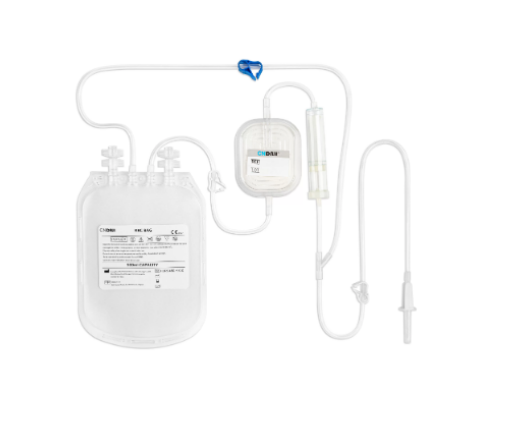
Flow rate refers to the volume of blood passing through the filter over a specific period. It is usually expressed in milliliters per minute, such as mL/min.
Filtration time refers to the total time required to process a defined blood volume from the start of filtration until the required endpoint is reached.
For example, if a filter processes 450 ml of red blood cell suspension at an average flow rate of 90 ml/min, the theoretical processing time would be approximately five minutes:
450 ml ÷ 90 ml/min = 5 minutes
However, this calculation is only a simplified illustration. Real blood filtration is affected by multiple variables, including:
· Blood component type and viscosity
· Blood volume
· Blood temperature
· Filter membrane structure
· Leukocyte and microaggregate loading
· Tubing length and connector design
· Gravity or external pressure
· Filter priming and wetting
· Blood bag position
· The condition of the blood component before filtration
This is why a supplier’s advertised maximum flow rate should not be treated as the actual filtration time that a blood bank or hospital will achieve during routine operation.
When comparing red blood cell leukocyte reduction filters, buyers should request both the flow rate and the complete filtration time under clearly defined test conditions.
Filtration time directly affects operational efficiency.
A blood center processing hundreds or thousands of units may experience significant labor and scheduling differences between a filter that processes each unit consistently and one that starts quickly but slows down during the final stage.
For laboratory or pre-storage leukoreduction, filtration time can influence:
· Daily processing capacity
· Staff workload
· Blood component release schedules
· Cold-chain management
· Equipment and workspace utilization
· The time required before blood products enter storage
· The ability to respond to urgent demand
For bedside filtration, total time may affect the transfusion workflow, nursing workload, and the time required to complete a transfusion according to the hospital’s internal protocol.
However, faster filtration is not automatically better. A filter must maintain the required leukocyte removal performance and protect the red blood cells throughout the process. A very high flow rate may have little practical value if it causes excessive blood loss, unstable filtration, or inconsistent performance between batches.
The most useful procurement goal is therefore predictable filtration time rather than the highest possible peak flow rate.
Suppliers may use different terms when describing the filtration performance of an RBC filter. Before comparing quotations, buyers should confirm exactly which flow rate is being reported.
Initial flow rate measures how quickly blood passes through the filter during the early stage of filtration.
This number may appear attractive in a product brochure, but it does not necessarily represent the performance of the complete filtration cycle. The initial flow rate can be higher because the membrane has not yet accumulated leukocytes, microaggregates, or other retained materials.
A filter that delivers a strong initial flow but slows significantly later may have a longer total processing time than expected.
Average flow rate is calculated using the total processed volume divided by the total filtration time.
This is generally more useful for procurement because it reflects the complete filtration cycle. It also allows buyers to compare different filters more fairly, provided that the test volume, temperature, pressure, and blood component are the same.
For example, a supplier should clarify whether the average flow rate was calculated using:
· The full 450 ml processing volume
· Only the first 100 ml
· A specific red blood cell concentration
· A laboratory test fluid instead of actual blood
· A gravity-fed or pressure-assisted system
Without this information, the number cannot be used for a reliable supplier comparison.
Stable flow rate refers to the ability of the filter to maintain consistent performance during the filtration process.
Stable flow is important for blood banks because it reduces unexpected interruptions and makes production scheduling easier. A filter that maintains a relatively consistent rate is usually easier to integrate into standard operating procedures.
Buyers should ask suppliers to provide filtration curves or test records showing how the flow changes from the beginning to the end of the process.
Final-stage flow rate describes the performance near the end of filtration, when the membrane may contain a higher concentration of retained white blood cells and microaggregates.
This measurement is often overlooked. However, it is valuable because the final stage may be the point at which filtration slows, pressure increases, or operators need to intervene.
When testing an RBC filter sample, buyers should record the time required for the full unit rather than stopping the evaluation after the first few minutes.
A filter’s job is not only to move blood quickly. It must selectively remove leukocytes while allowing red blood cells to pass through with minimal damage and minimal product loss.
If the membrane is too restrictive, the filter may cause:
· Slow filtration
· Higher pressure requirements
· Incomplete processing
· Greater residual blood volume in the filter
· Lower RBC recovery
· More frequent operator intervention
If the membrane is too open or the filtration mechanism is not selective enough, it may produce a high flow rate but fail to provide the required leukocyte reduction performance.
An appropriate RBC leukoreduction filter must balance several performance factors:
1. Leukocyte removal efficiency
2. Red blood cell recovery
3. Filtration time
4. Hemolysis performance
5. Blood-contacting material safety
6. Compatibility with the blood bag and tubing system
7. Consistency between production lots
DaJiMed’s published specifications for its leukocyte filters include a leukocyte removal rate of at least 99.9999%, RBC recovery of at least 85%, and processing volumes of up to 450 ml for whole blood and RBC applications. Buyers can review the single leukocyte reduction filter specifications before requesting a quotation.
Two suppliers may report different flow rates even when their filters have similar actual performance. The difference may result from different test conditions.
Before comparing suppliers, request the following information.
The supplier should identify whether the test used:
· Whole blood
· Red blood cell concentrate
· Stored RBC suspension
· Fresh blood component
· A laboratory substitute fluid
The total test volume should also be stated. An RBC filter designed for a 450 ml unit should be evaluated using a comparable processing volume.
Temperature can influence viscosity and filtration behavior. Buyers should confirm whether the test was completed with refrigerated blood, room-temperature blood, or warmed blood.
DaJiMed’s quality-control information states that its filtration products can be used with blood component temperatures between 4°C and 37°C. However, buyers should still confirm the recommended operating range for the specific RBC filter model and application.
The test should clearly state whether the blood was filtered by:
· Gravity
· Blood bag height
· Manual pressure
· Pressure-assisted equipment
· A laboratory pump
A flow rate achieved under pressure assistance cannot be compared directly with a gravity-based bedside filter.
Some filter membranes require a defined priming or wetting procedure before blood filtration. The supplier should explain:
· Whether saline or another solution is required
· How much priming solution is used
· Whether the priming time is included in the reported filtration time
· Whether the filter is ready to use
· Whether air removal is required before operation
For procurement, the most useful number is the total workflow time, including preparation, filtration, and completion steps.
Suppliers should define when the filtration process is considered complete.
Possible endpoints include:
· The full target volume has passed through the filter
· The blood bag has visibly emptied
· The flow has stopped
· The residual blood volume reaches a defined limit
· A required leukocyte reduction result has been achieved
A quotation should not list “filtration time” without explaining the endpoint.
Filtration time must be evaluated together with RBC recovery.
RBC recovery measures how much of the red blood cell product is successfully recovered after filtration. A filter that leaves a large amount of RBC suspension inside the housing or tubing may appear efficient from a time perspective, but it can increase the cost per usable unit.
For high-volume blood centers, even a small difference in recovery can have a meaningful financial impact across thousands of units.
Hemolysis is another important factor. Excessive mechanical stress, pressure, or unsuitable membrane characteristics may damage red blood cells during filtration. Therefore, a buyer should ask for hemolysis data alongside flow rate data.
DaJiMed’s quality control page presents information related to filtration time, RBC recovery, residual white blood cells, microaggregate removal, and hemolysis performance. When requesting a quotation, buyers should ask whether the supplied test data applies to the exact RBC filter model being quoted.
A procurement team can use the following scorecard when comparing suppliers. The weighting should be adjusted according to the organization’s quality system and application.
Evaluation item | Suggested importance | Questions to ask |
Leukocyte reduction | Very high | What residual WBC or log-reduction data is available? |
Full filtration time | Very high | How long does it take to process the complete RBC unit? |
RBC recovery | Very high | What percentage of RBCs are recovered after filtration? |
Hemolysis | Very high | Is hemolysis tested under the same operating conditions? |
Flow consistency | High | Does the flow remain stable throughout the complete cycle? |
Blood bag compatibility | High | Are the connectors and tubing compatible with the current system? |
Operating temperature | High | Can the filter process refrigerated or warmed blood components? |
Sterility and shelf life | High | What sterilization method and shelf life are provided? |
Certification documents | High | Are CE, ISO 13485, biocompatibility, and test documents available? |
Supply capability | Medium to high | Can the supplier support samples, bulk orders, and repeat supply? |
This approach prevents buyers from selecting a filter based only on one impressive flow-rate figure.
The intended application should be confirmed before comparing filtration time.
A bedside RBC filter is used at the point of transfusion. Buyers may focus on ease of use, connection compatibility, reliable flow under gravity or low pressure, and simple operation for clinical staff.
A laboratory RBC filter is used during blood component processing, usually before storage or issue. Buyers may place more emphasis on:
· Consistent performance across multiple units
· Integration with blood bank procedures
· Processing capacity
· Tubing and connector configuration
· Traceability
· Batch testing
· Recovery and residual leukocyte results
DaJiMed provides both bedside and laboratory configurations. Buyers can review the leukocyte filter for blood transfusion page when selecting a single filter, or review the leukoreduction filter set page when a complete tubing and connector system is required.
A sample evaluation should be based on the actual application rather than a general visual inspection.
A practical evaluation process may include the following steps.
Tell the supplier whether the filter will be used for RBC concentrate, whole blood processing, or another blood component. RBC and whole blood filters should not be treated as automatically interchangeable.
State the normal processing volume, such as a 450 ml unit, and identify whether the volume may vary between batches.
Measure the time from the start of filtration to the defined endpoint. Record both the initial flow behavior and the final-stage flow behavior.
Measure the amount of usable RBC product recovered after filtration and identify any significant residual volume in the filter or tubing.
Request laboratory test results for hemolysis and residual leukocytes. These results should be linked to the tested model, batch, blood component, and operating conditions.
Test the filter with the actual blood bag, tubing, connector, and transfusion equipment used by the hospital or blood center.
Before approving the supplier, request the relevant product specification, certificate, sterilization information, shelf-life data, batch records, and quality-control documents.
DaJiMed states that it can provide product samples for clinical evaluation and compatibility testing to qualified hospital procurement teams and blood bank professionals. Buyers can contact DaJiMed for RBC filter samples and technical documents.
For buyers comparing RBC filter suppliers, DaJiMed provides a product range designed for bedside, laboratory, blood bank, and OEM applications.
The current product information highlights:
· Leukocyte reduction of at least 99.9999% for the detailed filter range
· RBC recovery of at least 85%
· Processing volume of up to 450 ml for RBC and whole blood applications
· Bedside and laboratory configurations
· EO sterilization
· Two-year shelf life
· ISO 10993 blood-contacting material testing
· CE marking and ISO 13485 certification
· Technical documents and samples for qualified procurement projects
DaJiMed’s membrane technology uses modified polymer structures and surface treatments to improve leukocyte adsorption, membrane hydrophilicity, and blood compatibility. More information is available on the DaJiMed filtration technology page.
Before approving an RBC leukocyte reduction filter supplier, confirm the following:
· Is the flow rate an initial, average, stable, or maximum value?
· Does the reported filtration time cover the complete processing cycle?
· Was the test performed using the same RBC volume required by your facility?
· Were blood temperature and pressure clearly stated?
· Does the filter maintain acceptable flow during the final stage?
· What is the RBC recovery rate?
· What is the hemolysis result?
· What leukocyte reduction or residual WBC data is available?
· Is the filter compatible with your blood bags and connectors?
· Is the filter available in bedside or laboratory configuration?
· Are sterilization, shelf life, and certification documents available?
· Can the supplier provide samples for compatibility testing?
· Can the manufacturer support repeat orders and long-term supply?
Flow rate is only one part of RBC filter performance. The better purchasing decision comes from comparing complete filtration time, blood component recovery, leukocyte removal, hemolysis, compatibility, and supply documentation under the same conditions.
If you are sourcing a red blood cell leukocyte reduction filter for a hospital, blood bank, blood bag production line, medical distributor, or government tender, contact DaJiMed for product specifications, samples, compatibility evaluation, and a bulk quotation.
Previous: None

No. 132 Buling Road, Huangpu District, Guangzhou, P.R.China



Copyright © Guangzhou DaJi Medical Science and Technology Co., Ltd. All Rights Reserved Sitemap | Powered by 


