Leukocyte reduction plays a critical role in modern transfusion safety. By effectively removing white blood cells (WBCs) from blood components, leukocyte filters help reduce febrile non-hemolytic transfusion reactions (FNHTRs), minimize alloimmunization, and lower the risk of transmitting leukocyte-associated pathogens.
However, not all leukocyte filters deliver the same level of performance in real clinical settings. For hospital procurement teams and blood bank decision-makers, selecting the right leukocyte filter is not simply about choosing a compliant product—it requires a clear understanding of performance metrics, operational efficiency, and compatibility with clinical workflows.
This guide outlines the key evaluation criteria for leukocyte filter performance, helping hospitals make informed, cost-effective, and clinically sound procurement decisions.
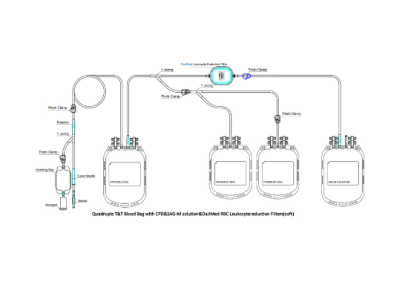
Many leukocyte filters on the market claim high efficiency, often exceeding 99% leukocyte removal. While these claims may meet basic regulatory requirements, real-world performance can vary significantly depending on:
· Blood component type (RBCs, platelets, plasma)
· Filtration timing (inline vs pre-storage)
· Clinical workload and transfusion speed
· Equipment compatibility
Selecting a poorly matched leukocyte filter can lead to:
· Increased transfusion time
· Higher nursing workload
· Inconsistent leukocyte reduction
· Elevated risk of transfusion reactions
· Hidden operational costs
For procurement teams, this means that evaluating leukocyte filter performance is essential not only for patient safety but also for long-term cost control and workflow efficiency.
The most critical performance indicator of a leukocyte filter is its log reduction value (LRV), which measures how effectively the filter removes white blood cells.
Log reduction refers to the logarithmic decrease in leukocyte count after filtration. For example:
· 1 log reduction = 90% removal
· 2 log reduction = 99% removal
· 3 log reduction = 99.9% removal
· 4 log reduction = 99.99% removal
In most clinical settings, a minimum of 4 log reduction is considered the standard for effective leukocyte filtration.
Higher log reduction ensures:
· Lower residual leukocyte count
· Reduced cytokine-related complications
· Improved safety for immunocompromised patients
Filters with inconsistent or lower log reduction may still pass basic requirements but can introduce clinical variability and risk, especially in high-dependency patient groups.
While leukocyte removal efficiency is essential, flow rate directly impacts usability in clinical environments.
Flow rate refers to the speed at which blood passes through the filter during transfusion or processing.
A slow or unstable flow rate can:
· Prolong transfusion time
· Increase nursing workload
· Create bottlenecks in emergency situations
· Lead to incomplete or interrupted transfusions
This is particularly critical in:
· Emergency departments
· Trauma centers
· High-volume transfusion units
· Average filtration time per unit
· Flow stability across different blood viscosities
· Performance under real clinical pressure (not just lab conditions)
A high-quality leukocyte filter should maintain a consistent and clinically acceptable flow rate without compromising filtration efficiency.
Compatibility is often overlooked but plays a crucial role in ensuring seamless integration into hospital workflows.
· Red blood cells (RBCs)
· Platelets
· Plasma
Not all filters are optimized for all components. Using an incompatible filter can result in:
· Reduced filtration efficiency
· Increased hemolysis risk
· Poor flow performance
· Blood bag systems
· Inline transfusion setups
· Pre-storage processing systems
A mismatch can lead to:
· Leakage or connection issues
· Increased setup time
· Operational inefficiencies
Hospitals should prioritize leukocyte filters that are validated for their specific clinical applications and compatible with existing transfusion systems.
Beyond the three primary metrics, several secondary factors can significantly impact real-world performance and should be included in procurement evaluation.
Consistency is just as important as average performance. Reliable filters should deliver stable leukocyte reduction across all units, not just optimal conditions.
Lower priming volume:
· Reduces blood loss
· Improves efficiency in transfusion preparation
· Enhances usability in critical care settings
Filters used in pre-storage settings should:
· Minimize cytokine accumulation
· Preserve blood component integrity
· Extend effective storage life
Ensure the product meets:
· International regulatory standards
· Sterility assurance levels
· Documented quality validation
To simplify evaluation, hospital procurement teams can use the following checklist:
· Log reduction ≥ 4 log
· Low and consistent residual leukocyte count
· Stable flow rate under clinical conditions
· Compatible with blood components (RBCs, platelets, plasma)
· Easy integration with existing systems
· Minimal impact on transfusion time
· Certified according to relevant medical standards
· Documented performance validation
· Reliable batch-to-batch consistency
Using a structured checklist helps procurement teams move beyond marketing claims and focus on measurable, clinically relevant performance indicators.
Different healthcare facilities have different priorities. Selecting the right leukocyte filter should be based on:
· Transfusion volume – High-volume centers require efficiency and scalability
· Patient population – High-risk patients demand consistent, high-level leukocyte reduction
· Workflow structure – Centralized vs bedside filtration impacts filter selection
· Budget constraints – Balance upfront cost with long-term operational savings
A well-matched leukocyte filtration solution improves not only clinical outcomes but also workflow efficiency and cost-effectiveness.
Evaluating leukocyte filter performance is a critical step in hospital procurement. By focusing on key metrics such as log reduction, flow rate, and compatibility, along with additional operational and quality factors, healthcare providers can make informed decisions that enhance both patient safety and operational efficiency.
Rather than relying solely on basic specifications, procurement teams should adopt a comprehensive evaluation approach, ensuring that selected filters perform reliably under real clinical conditions.
Choosing the right leukocyte filter requires more than meeting minimum standards—it demands consistent performance, proven reliability, and seamless workflow integration.
DaJiMed provides advanced leukocyte filtration solutions designed to meet the evolving needs of hospitals and blood centers. Our products deliver:
· High-efficiency leukocyte reduction with stable performance
· Optimized flow rates for clinical efficiency
· Broad compatibility across blood components and systems
· Compliance with international quality and regulatory standards
Whether you are optimizing transfusion workflows or upgrading your procurement strategy, DaJiMed helps you achieve safer, more efficient, and more reliable leukocyte filtration.
Contact DaJiMed today to find the right solution for your clinical application.

No. 132 Buling Road, Huangpu District, Guangzhou, P.R.China



Copyright © Guangzhou DaJi Medical Science and Technology Co., Ltd. All Rights Reserved Sitemap | Powered by 


